Australian tax rates 2026–27: brackets, the 15% cut and examples
From 1 July 2026 the second resident tax rate fell from 16% to 15%. Here are the full 2026–27 brackets, how much the change saves and what tax looks like at common salaries.
Resident tax brackets for 2026–27
These rates apply to Australian residents for tax purposes for the full income year from 1 July 2026 to 30 June 2027. They don't include the 2% Medicare levy.
| Taxable income | Tax on this income |
|---|---|
| $0 – $18,200 | Nil |
| $18,201 – $45,000 | 15c for each $1 over $18,200 |
| $45,001 – $135,000 | $4,020 plus 30c for each $1 over $45,000 |
| $135,001 – $190,000 | $31,020 plus 37c for each $1 over $135,000 |
| $190,001 and over | $51,370 plus 45c for each $1 over $190,000 |
What changed and what it's worth
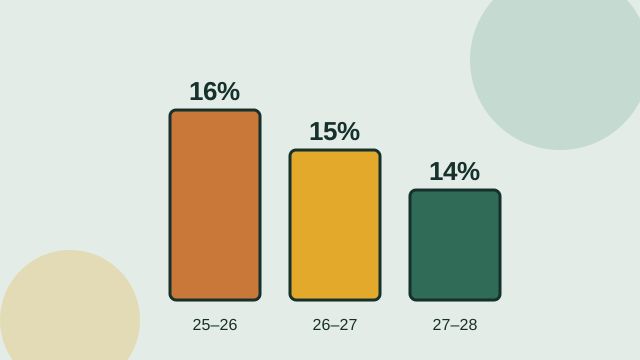
Only one thing changed on 1 July 2026: the 16% rate on income between $18,201 and $45,000 became 15%. Every threshold stayed where it was. Because the band is $26,800 wide, the most anyone can save is 1% of that, or $268 a year. You get the full $268 once your taxable income reaches $45,000. A second cut, to 14% from 1 July 2027, is already legislated and is worth another $268.
How marginal tax works
Each rate applies only to the slice of income inside its bracket. Earning $1 more than $45,000 doesn't make your whole income taxed at 30% — just that extra dollar. That's why moving into a higher bracket never leaves you worse off before other effects such as means-tested payments.
Tax at common salaries in 2026–27
For an Australian resident with no study loan, including LITO and the standard Medicare levy:
| Salary | Income tax | Medicare | Take-home | Per fortnight |
|---|---|---|---|---|
| $60,000 | $8,420 | $1,200 | $50,380 | $1,937.69 |
| $70,000 | $11,520 | $1,400 | $57,080 | $2,195.38 |
| $90,000 | $17,520 | $1,800 | $70,680 | $2,718.46 |
| $100,000 | $20,520 | $2,000 | $77,480 | $2,980.00 |
| $120,000 | $26,520 | $2,400 | $91,080 | $3,503.08 |
| $150,000 | $36,570 | $3,000 | $110,430 | $4,247.31 |
| $200,000 | $55,870 | $4,000 | $140,130 | $5,389.62 |
Calculate any other income with the take-home pay calculator, or compare years with the tax cut calculator.
Low income tax offset
LITO reduces tax for residents on lower incomes. It is $700 for taxable income up to $37,500, falls by 5 cents for each dollar between $37,500 and $45,000, then by 1.5 cents per dollar until it reaches zero at $66,667. Combined with the tax-free threshold, it means a resident with only taxable income pays no income tax until about $22,866 in 2026–27.
Medicare levy
Most residents pay a Medicare levy of 2% of taxable income. People on low incomes pay less or none: for singles the levy starts above $28,011, the threshold that applies from 2025–26, and shades in at 10 cents per dollar until it reaches the full 2%. Families and seniors have higher thresholds. Separately, higher earners without private hospital cover may pay the Medicare levy surcharge.
Foreign residents and working holiday makers
Foreign residents don't get the tax-free threshold or LITO and don't pay the Medicare levy. Their rates start at 30% up to $135,000, then 37% and 45%; the 1 July 2026 cut did not change them. Working holiday makers pay 15% on the first $45,000, then the 30%, 37% and 45% rates — see the working holiday maker tax calculator.
What isn't in these rates
Your final tax depends on deductions, offsets, other income, the Medicare levy surcharge, study loan repayments and, for very high incomes, Division 293 tax on super contributions. The figures here are a guide to tax on salary; your notice of assessment is the final word.
Key dates for 2026–27
The income year runs from 1 July 2026 to 30 June 2027. Employers applied the new tax tables from the first pay on or after 1 July 2026. Individual tax returns for 2026–27 open after 30 June 2027 and are due by 31 October 2027 if you lodge yourself, with later dates available through a registered tax agent. The legislated cut to 14% starts with pays from 1 July 2027.
A quick worked example
On $100,000 of taxable income in 2026–27: the first $18,200 is tax-free, the next $26,800 is taxed at 15% ($4,020), and the remaining $55,000 at 30% ($16,500), for income tax of $20,520. LITO is nil at this income. Add the 2% Medicare levy of $2,000, and total tax is $22,520, leaving $77,480 — an average rate of 22.5%.
Part-year residents receive a reduced tax-free threshold, so their results will differ.
Tax rates for previous years
For comparison, in 2025–26 the same brackets applied with 16% in place of 15%, so tax on $45,000 was $4,288 rather than $4,020. In 2024–25, the first year of the Stage 3 changes, the rates were also 0%, 16%, 30%, 37% and 45%. Before that, from 2020–21 to 2023–24, the scale was 19%, 32.5%, 37% and 45% with different thresholds. Use the take-home calculator's year selector for 2025–26 and 2026–27.
Try it: Tax cut calculator — Compare your tax across 2025–26, 2026–27 and 2027–28.